- +91 81416 55955
- dryharwani@gmail.com
- Monday - Saturday 09:00AM to 08:00PM

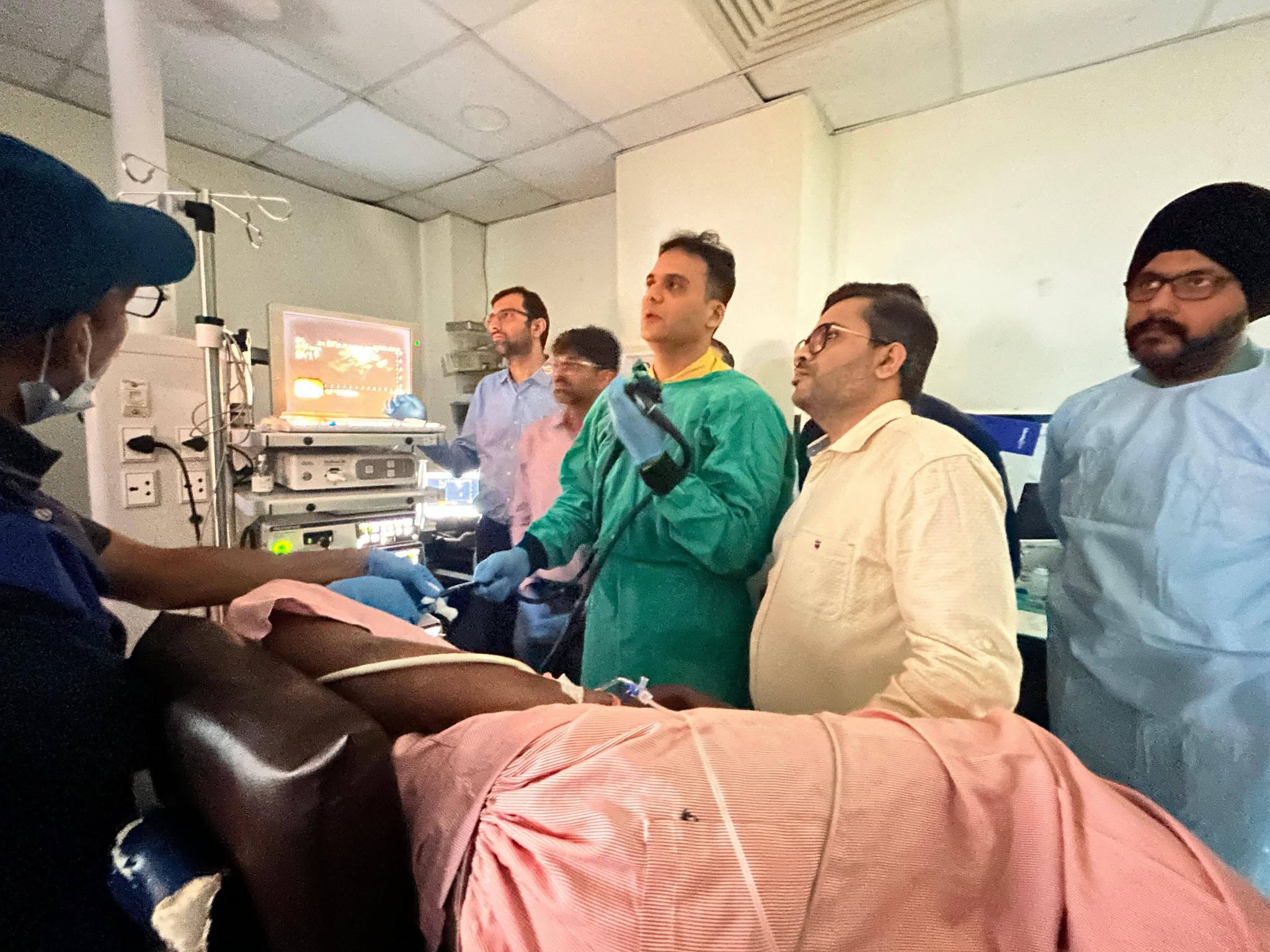
What Is Endoscopic Ultrasound (EUS)? A Complete Guide to the Procedure, Benefits and Uses
Endoscopic Ultrasound (EUS) is a minimally invasive diagnostic and therapeutic procedure that combines endoscopy with high-frequency ultrasound imaging. It allows doctors to obtain detailed images of the digestive tract and nearby organs, including the pancreas, bile ducts, gallbladder, liver, lymph nodes, and surrounding blood vessels.
How Does EUS Work?
During EUS, a thin flexible endoscope equipped with a small ultrasound probe is gently passed through the mouth into the digestive tract. The ultrasound probe produces high-resolution images of structures located beneath and around the gastrointestinal tract, allowing abnormalities that may not be clearly visible with conventional endoscopy or imaging tests to be evaluated.
EUS can also be used to obtain tissue samples using a fine needle, a technique known as EUS-guided fine-needle aspiration (FNA) or fine-needle biopsy (FNB).
What Are the Uses of EUS?
EUS-Guided Treatment
Apart from diagnosis, EUS has become an important therapeutic tool. It can provide access to areas that may be difficult to reach through conventional endoscopy or surgery. Depending on the clinical condition, EUS can be used for procedures such as drainage of pancreatic fluid collections, biliary drainage, and selected interventions involving the gastrointestinal and pancreaticobiliary systems.
Benefits of EUS
Is EUS Safe?
EUS is generally considered a safe procedure when performed by an experienced endoscopist. As with any invasive procedure, there can be potential risks related to sedation, bleeding, infection, or injury to surrounding structures. The specific risks depend on whether EUS is being performed for diagnosis, tissue sampling, or therapeutic intervention.
Conclusion
Endoscopic Ultrasound has evolved from a purely diagnostic technique into an advanced endoscopic platform with both diagnostic and therapeutic applications. Its ability to provide detailed imaging, obtain tissue samples, and perform minimally invasive interventions makes EUS an important part of modern gastrointestinal and pancreaticobiliary care.