- +91 81416 55955
- dryharwani@gmail.com
- Monday - Saturday 09:00AM to 08:00PM

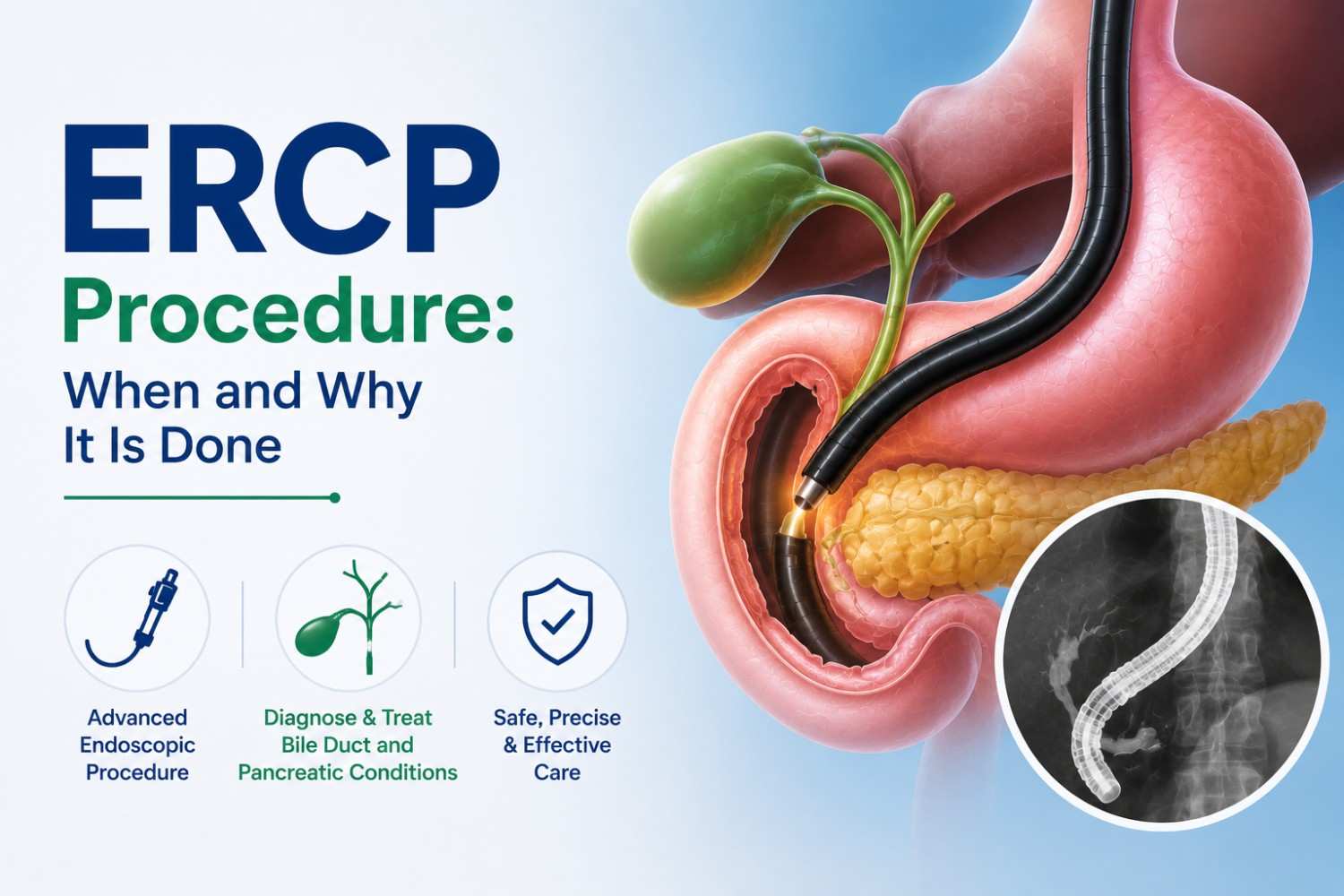
The ERCP procedure is an advanced medical test used to diagnose and treat problems in the bile ducts, pancreas, and gallbladder. It combines endoscopy and X-ray imaging to identify blockages or diseases inside the digestive system.
ERCP stands for: Endoscopic Retrograde Cholangiopancreatography.
ERCP is a minimally invasive procedure where a thin, flexible tube called an endoscope is passed through the mouth into the digestive tract. A dye is then injected into the bile and pancreatic ducts, and X-ray images are taken to identify any blockage or abnormality.
Unlike simple diagnostic tests, ERCP can also be used for treatment during the same procedure.
Doctors recommend ERCP for conditions such as:
ERCP is an advanced and effective procedure for diagnosing and treating serious bile duct and pancreatic conditions. It is recommended when non-invasive tests are not enough or when immediate treatment is required.
If you have symptoms like jaundice, severe abdominal pain, or suspected gallstones, consult a gastroenterologist early for proper care.