- +91 81416 55955
- dryharwani@gmail.com
- Monday - Saturday 09:00AM to 08:00PM

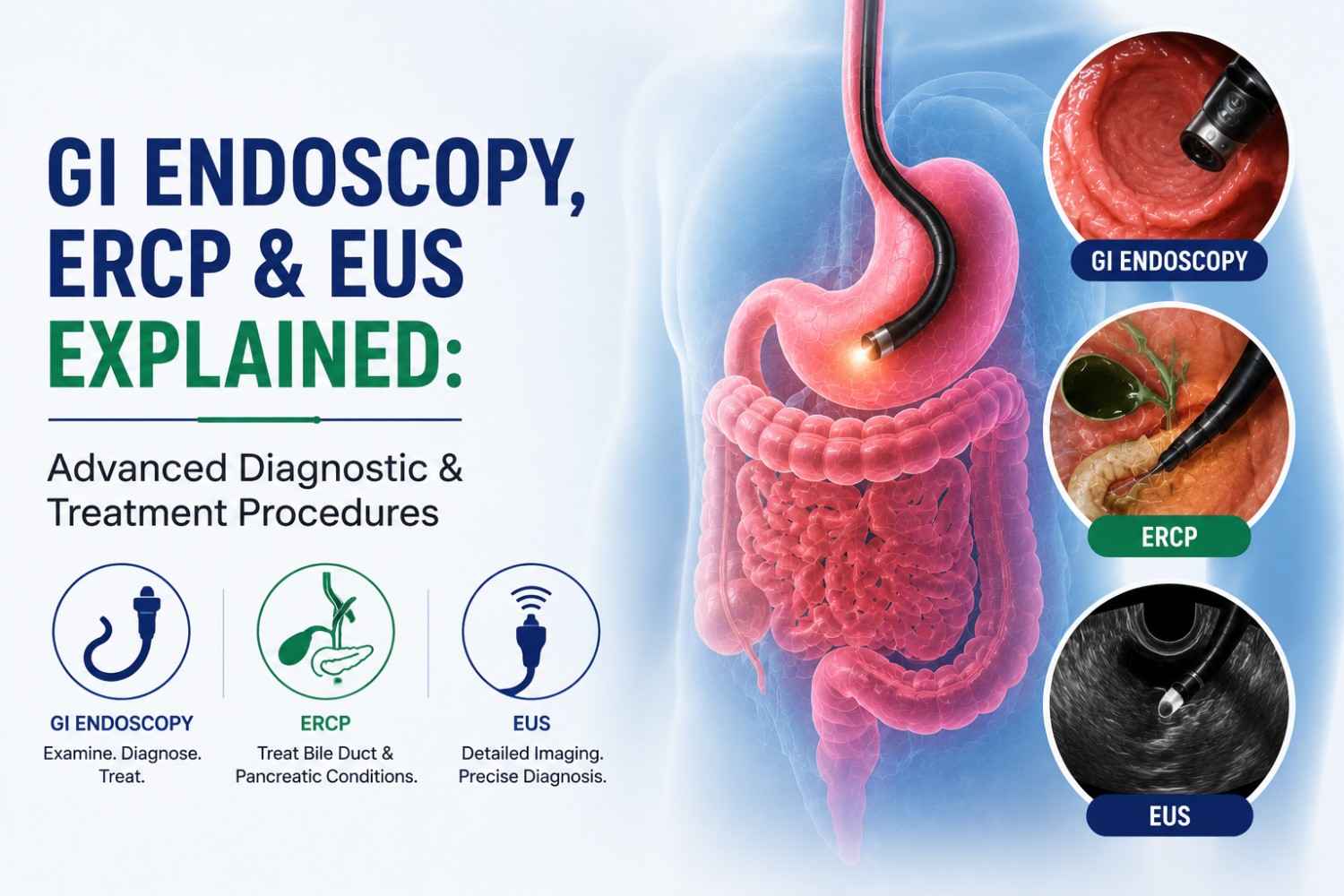
Modern gastroenterology has evolved significantly with advanced endoscopic techniques. Procedures like GI Endoscopy, ERCP, and EUS help doctors diagnose and treat digestive diseases with high accuracy and minimal invasiveness.
These procedures often help avoid major surgeries and allow faster recovery for patients.
GI Endoscopy is a procedure where a thin, flexible tube with a camera is used to examine the digestive tract.
It is both diagnostic and minor therapeutic procedure.
ERCP is a specialized procedure used to diagnose and treat problems in the bile ducts and pancreas.
ERCP is both diagnostic and therapeutic.
EUS combines endoscopy and ultrasound to produce detailed images of digestive organs and nearby structures.
| Procedure | Purpose | Main Use |
|---|---|---|
| GI Endoscopy | View digestive tract | Acidity, ulcers, bleeding |
| ERCP | Treat bile/pancreatic ducts | Stones, jaundice |
| EUS | Detailed imaging | Tumors, pancreas, staging |
Yes, these procedures are generally safe when performed by experienced specialists.
Serious complications are uncommon.
GI Endoscopy, ERCP, and EUS are powerful tools that allow doctors to diagnose and treat complex digestive conditions safely without major surgery.
If you have persistent acidity, abdominal pain, jaundice, or digestive issues, consult a gastroenterologist early.