- +91 81416 55955
- dryharwani@gmail.com
- Monday - Saturday 09:00AM to 08:00PM

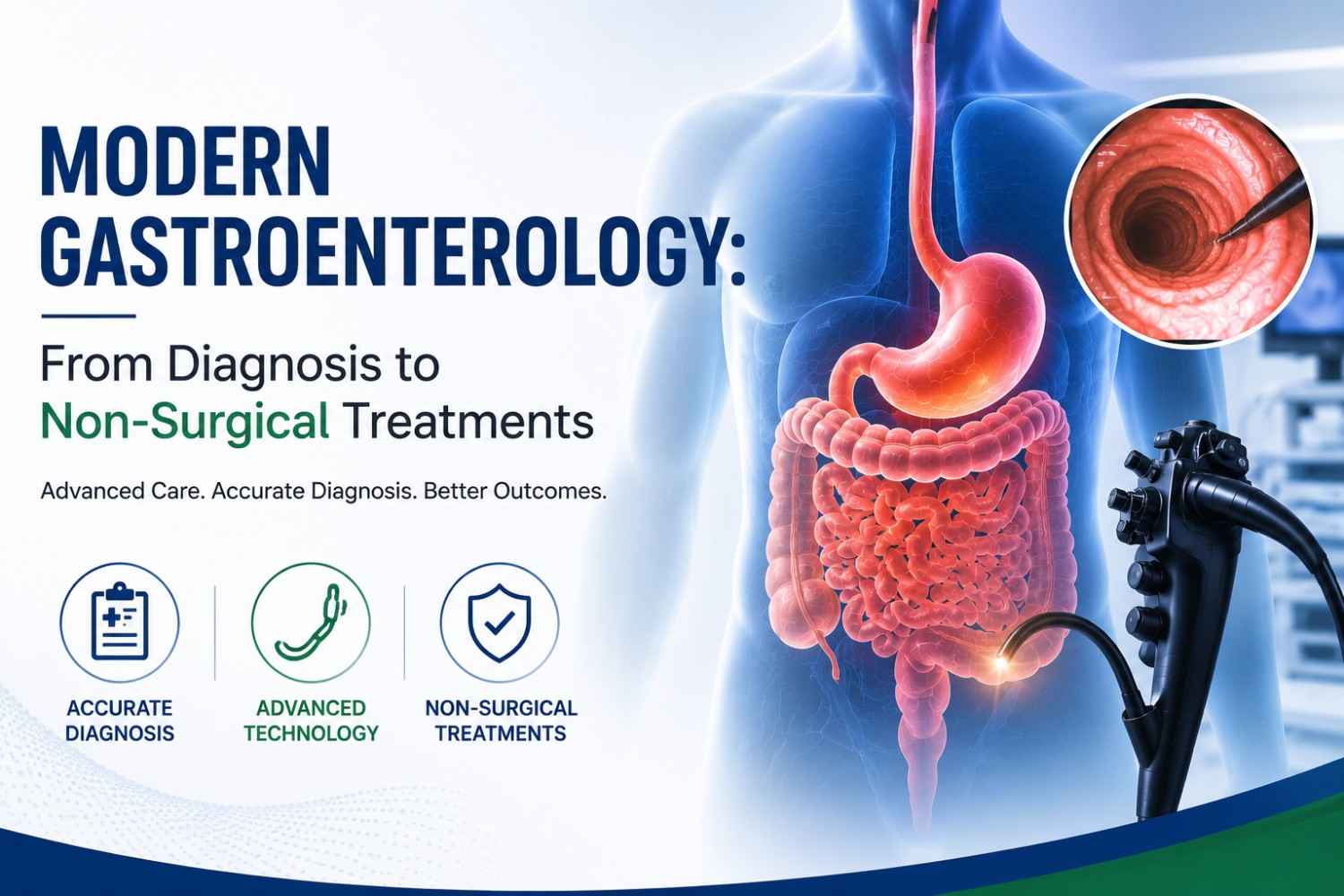
Modern gastroenterology has transformed the way digestive disorders are diagnosed and treated. With rapid advancements in medical technology, patients today benefit from accurate diagnosis, minimally invasive procedures, and faster recovery times—often without the need for traditional surgery.
This evolution has made digestive healthcare safer, more efficient, and far more comfortable for patients.
Gastroenterology focuses on the health of the digestive system, including the esophagus, stomach, intestines, liver, pancreas, and gallbladder.
Common conditions include:
Today’s approach combines clinical expertise with advanced diagnostic tools to detect diseases early and provide targeted treatments.
Modern gastroenterology uses advanced tools such as:
These techniques provide real-time insights and often eliminate the need for exploratory surgery.
One of the biggest advancements is the ability to treat conditions without surgery using endoscopic procedures:
These treatments reduce hospital stay and allow quicker recovery compared to traditional surgery.
Gastroenterology continues to advance with innovations such as AI-assisted diagnostics, high-definition imaging, and robotic-assisted endoscopy.
These technologies will further improve accuracy, early detection, and patient outcomes.
Modern gastroenterology bridges the gap between diagnosis and non-surgical treatment. Advanced endoscopic techniques allow safe and effective management of many digestive conditions without major surgery.
If you experience digestive symptoms, early consultation with a specialist can lead to better outcomes and improved quality of life.