- +91 81416 55955
- dryharwani@gmail.com
- Monday - Saturday 09:00AM to 08:00PM

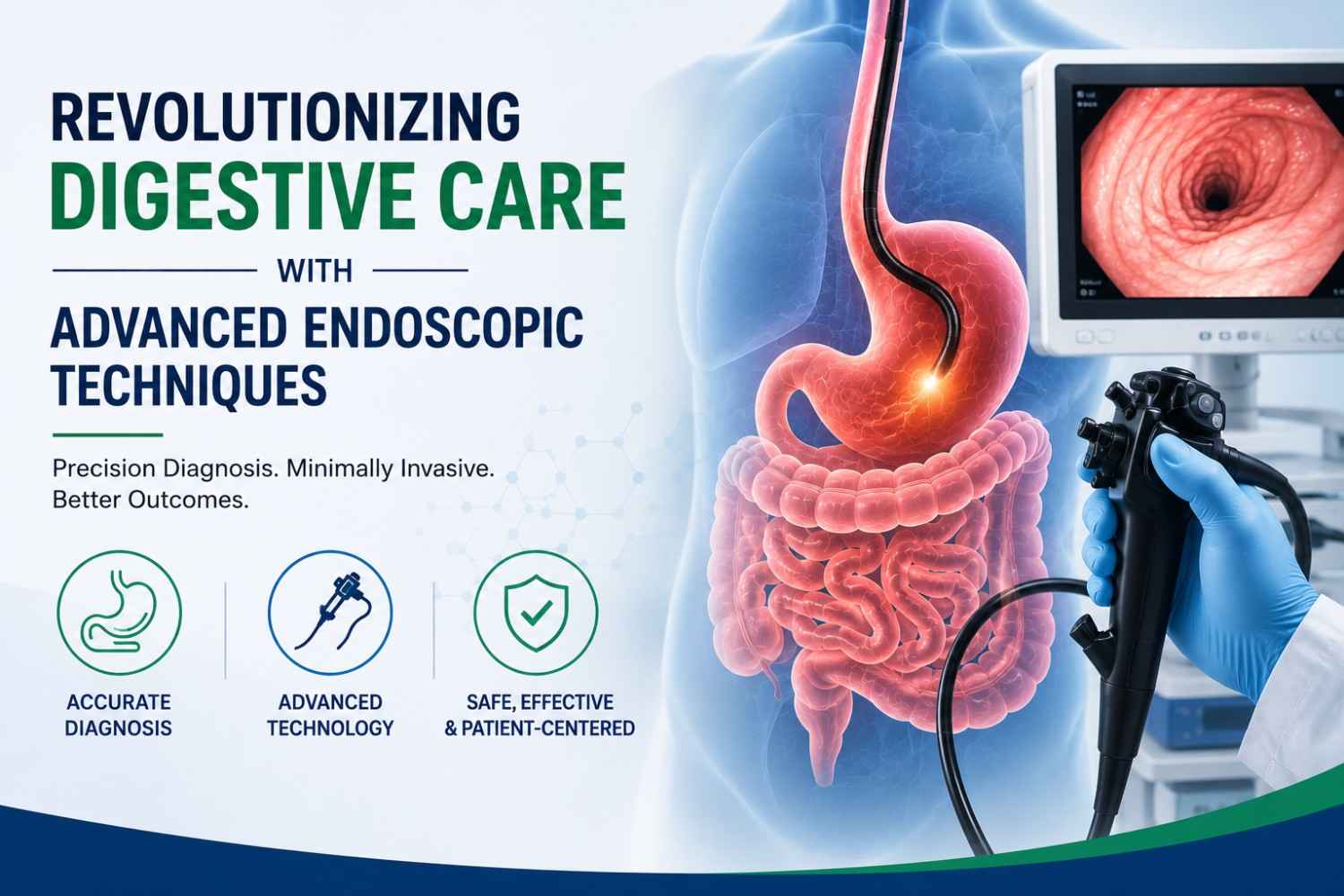
Digestive health plays a crucial role in overall well-being. Advances in gastroenterology have significantly improved how gastrointestinal (GI) conditions are diagnosed and treated. Among these innovations, advanced endoscopic techniques stand out as a game-changer—offering minimally invasive and highly effective solutions.
These modern approaches reduce the need for traditional surgery and provide safer, faster recovery for patients.
Endoscopy involves a thin, flexible tube with a camera and light used to examine the digestive tract. Today, it has evolved from a diagnostic tool into a powerful therapeutic solution.
Specialists can now detect and treat abnormalities in real time during the same procedure.
Used to examine the esophagus, stomach, and upper small intestine. It helps diagnose ulcers, inflammation, and tumors.
A specialized procedure for diagnosing and treating conditions of the bile ducts, gallbladder, and pancreas such as stones and blockages.
Combines endoscopy with ultrasound imaging to provide detailed internal views, especially useful for pancreatic diseases and cancer staging.
Measures pressure and movement in the esophagus to diagnose swallowing disorders.
A non-surgical weight-loss procedure that reduces stomach size without external incisions.
Allows examination of deeper parts of the small intestine that were previously difficult to access.
Early diagnosis and timely treatment greatly improve outcomes.
Innovations like high-definition imaging, AI-assisted diagnostics, and robotic endoscopy are shaping the future of gastroenterology.
These advancements will further improve accuracy and reduce the need for invasive procedures.
Advanced endoscopic techniques are transforming digestive care by offering safer, faster, and minimally invasive solutions. From diagnosis to treatment, these methods are redefining modern gastroenterology.
If you experience digestive symptoms, early consultation and modern endoscopic evaluation can significantly improve your health and quality of life.